
Best Grip Strength Trainer for Longevity: 3 Options Compared
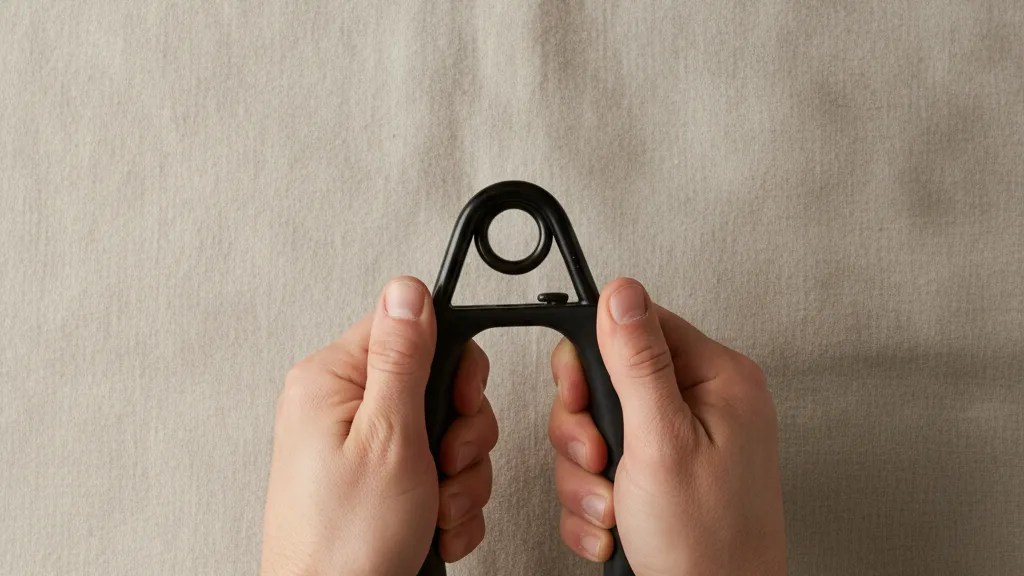
Grip strength is one of the simplest physical qualities to train and one of the easiest to measure. Researchers frequently use it as a practical indicator of overall muscular strength, and it appears often in the scientific literature on aging. For anyone building a long-term strength practice, it deserves a deliberate place in the routine.
This guide compares three products from their published specifications: an adjustable multi-piece grip kit, a single adjustable gripper with a clearly stated 22 to 132 lb range, and a digital hand dynamometer designed to measure grip strength rather than build it. Each serves a different role, and the right choice depends on whether you want to train, track, or both.
If you have joint pain, arthritis, a recent hand or wrist injury, or any medical condition, consult your doctor or a physical therapist before starting a new grip routine.
Quick picks
| Product | Best for | |
|---|---|---|
| NIYIKOW Adjustable Grip Strength Trainer | Readers who want one compact trainer with a defined, wide resistance range for steady long-term progression. | View |
| FitBeast Grip Strengthener Kit (5 Pieces) | Readers who prefer variety in hand and finger work and want a kit that can grow from beginner to advanced levels. | View |
| Handeful Digital Hand Grip Dynamometer | Data-minded readers who want a baseline and periodic objective check-ins on grip strength as they train. | View |
Why Grip Strength Belongs in a Longevity Routine
Your hands are involved in nearly every daily task, from carrying groceries to opening jars to steadying yourself on a railing. Maintaining strength in the hands, wrists, and forearms may support independence and ease of movement as the years accumulate.
Grip strength is also measurable in a standardized way, which is why it is commonly used in aging research and clinical settings. That measurability is useful at home too: a baseline number lets you see whether your training is moving in the right direction over months and years.
Grip work complements, rather than replaces, a broader program. Compound lifts such as deadlifts, rows, and loaded carries also train the hands. Dedicated grip tools simply make it easier to add focused, low-time-cost volume.
Training Tools vs. Measuring Tools
Two categories appear in this roundup. Grip trainers, like the FitBeast kit and the NIYIKOW gripper, provide adjustable resistance you squeeze repeatedly to build strength. A dynamometer, like the Handeful, records how much force you can produce in a single maximal squeeze.
The Handeful listing is explicit that it is a measuring tool, not a training device. It is best paired with a trainer, or with your existing strength routine, so you have an objective way to track results.
If you only want one product, start with a trainer. If you are data-oriented, managing training for a household, or want a periodic objective check-in, a dynamometer adds meaningful context.
How to Choose
Resistance range: Look for a stated range so you know where you start and how far you can progress. The NIYIKOW lists 22 to 132 lb. The FitBeast listing describes beginner to advanced levels but does not state a range in pounds.
Variety: A multi-piece kit can work the hand in more than one way, while a single gripper focuses on the closing squeeze. Note that the FitBeast listing does not itemize what its 5 pieces are.
Portability: Both trainers are marketed as compact enough for home, office, or travel. The NIYIKOW is listed at 140 g, and the FitBeast kit at 0.82 lb.
Fit: For the dynamometer, the internal handle size is listed at 3.23 in (8.2 cm), and the brand recommends measuring your hand to check fit.
Building a Sustainable Grip Practice
Consistency matters more than intensity. NIYIKOW suggests 5 to 10 minutes a day, a reasonable frame for a habit that fits into a workday. Start at a resistance that allows controlled, full repetitions and increase gradually.
Train both hands, allow rest between sessions, and stop if you feel sharp pain, numbness, or tingling. If you use a dynamometer, test under similar conditions each time, such as the same time of day and posture, so readings are comparable.
Anyone with existing hand, wrist, or elbow concerns should seek guidance from a qualified clinician before adding grip-specific training.
NIYIKOW Adjustable Grip Strength Trainer
A single adjustable gripper with a clearly published resistance range of 22 lb (10 kg) to 132 lb (60 kg). It is built from durable plastic and reinforced metal alloy, weighs 140 g, and is designed to fit in a bag or pocket. The brand positions it for hands, forearms, wrists, and fingers, with a suggested routine of 5 to 10 minutes a day.
- Clearly stated 22 to 132 lb adjustable range makes progression easy to plan
- Very light at 140 g and pocket-friendly for office or travel use
- Plastic and reinforced metal alloy construction
- Brand-suggested 5 to 10 minute daily routine is simple to adopt
- US-based 24/7 customer support per the listing
- Single unit trains mainly one squeezing motion, with less variety than a multi-piece kit
- The 22 lb starting point may feel demanding for some beginners
- Partly plastic construction
Best for: Readers who want one compact trainer with a defined, wide resistance range for steady long-term progression.
Check price on AmazonFitBeast Grip Strengthener Kit (5 Pieces)
A five-piece hand and finger strengthening kit with adjustable resistance hand grips, marketed to work the wrist and forearm as well. The grips are contoured to the palm with textured, non-slip rubber handles, and the product overview lists stainless steel and rubber materials. Resistance levels are described as spanning beginner to advanced, and the kit weighs 0.82 lb.
- Multi-piece kit offers more variety than a single gripper
- Contoured, textured non-slip rubber handles
- Adjustable resistance described from beginner to advanced
- Compact and portable for home, office, travel, or gym
- 24/7 after-sales customer service per the listing
- The listing does not itemize what the 5 pieces are
- No resistance range in pounds is published, making progression harder to quantify
- Heavier overall than a single gripper at 0.82 lb
Best for: Readers who prefer variety in hand and finger work and want a kit that can grow from beginner to advanced levels.
Check price on AmazonHandeful Digital Hand Grip Dynamometer
An electronic grip strength tester with a strain gauge sensor that measures up to 198 lb (90 kg) in 0.2 lb increments. It stores up to 19 user profiles with age and gender, and its large LCD shows grip value in lb or kg along with weak, normal, or strong status. The listing is clear that this is a measuring tool for tracking grip strength over time, not a training device.
- Objective measurement up to 198 lb in 0.2 lb increments
- Stores up to 19 user profiles, useful for households or groups
- Saves and recalls maximum grip and shows weak, normal, or strong levels
- Displays results in lb or kg; 2 AAA batteries included
- Not a training device; must be paired with a trainer or other strength work
- Fixed internal handle size of 3.23 in may not suit every hand, so measuring first is advised
- Brand advises avoiding prolonged use and wearing gloves for extended sessions
- Heaviest of the three at 358 g, and requires batteries
Best for: Data-minded readers who want a baseline and periodic objective check-ins on grip strength as they train.
Check price on AmazonFAQ
What is the best grip strength trainer for beginners?
The FitBeast kit is described as adjustable from beginner to advanced, which suits gradual starts. The NIYIKOW begins at 22 lb, a clear but slightly higher entry point. Choose a resistance that allows controlled, full repetitions.
Do I need a dynamometer if I already have a grip trainer?
No, but it helps. A trainer builds strength, while a dynamometer like the Handeful measures it, giving you an objective way to see progress over time.
How often should I train grip strength?
NIYIKOW suggests 5 to 10 minutes a day. Start conservatively, rest when needed, and increase resistance gradually. Consult a clinician if you have hand or wrist concerns.
Can grip training help with arthritis or hand pain?
These products are not intended to treat any condition. If you have arthritis, pain, or a prior injury, talk with your doctor or a physical therapist before starting grip exercises.
Bottom line
For most readers focused on long-term strength, the NIYIKOW Adjustable Grip Strength Trainer is the most straightforward choice, thanks to its clearly published 22 to 132 lb range and pocket-sized build. The FitBeast kit suits those who want more variety in hand and finger work, with the caveat that its listing does not specify its pieces or resistance in pounds.
The Handeful dynamometer plays a different role: it measures rather than trains. Paired with either trainer, it turns grip work into a trackable practice with a clear baseline. Whatever you choose, prioritize consistency, progress gradually, and check with your doctor if you have any hand, wrist, or health concerns. Check current pricing and availability on Amazon.